


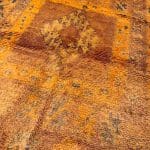
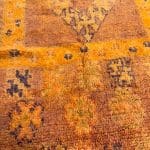
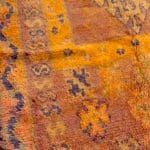

!
TAZNAKT carpet maintenance
Daily care
-
Vacuum regularly – but without a rotating brush (only a nozzle or gentle suction power) so that the wool does not wear out unnecessarily.
-
Turn the carpet occasionally so that the wear is distributed and the colors fade evenly.
-
Shake the carpet outside a few times a year – this loosens dust and grains of sand that are hiding in the fibers.
Stain removal
-
Always wipe spills immediately with a clean, white cloth – dab, don't rub.
-
Use lukewarm water with a little neutral soap (e.g. wool shampoo or soap flakes) on small stains.
-
Avoid chemical cleaners as they can ruin the plant colors.
Deeper cleaning
-
Clean the rug gently in cold water with mild wool soap if necessary. Let it dry flat in the shade – never in direct sunlight (which can fade the colors).
-
Professional cleaning is only recommended for people with experience in genuine vintage carpets – regular carpet cleaning can ruin the wool and colors.
The story behind TAZNAKT rugs
🧵 The Origin of Taznakht Carpets
-
Geography: Taznakht is located in southern Morocco, between Ouarzazate and the Sahara, at the foot of the Anti-Atlas Mountains.
-
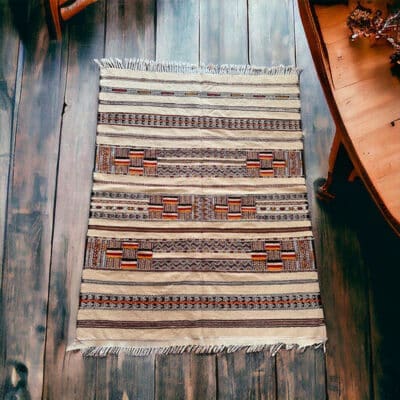
History: The area has been an important weaving center for centuries, where Berber women have created rugs that combine several weaving techniques: flat weaving (Kelim), knotted carpets and embroidery-like details.
-
Tribes: The carpets are connected with Aït Ouaouzguite tribe, which is known for their refined and color-saturated carpets.
🎨 Characteristics of Taznakht vintage rugs
-
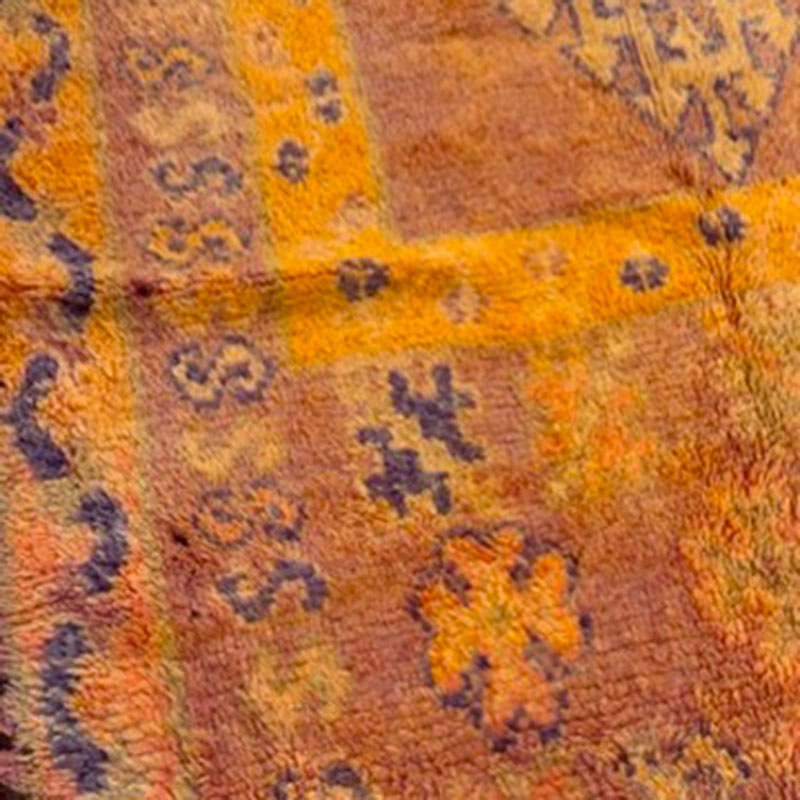
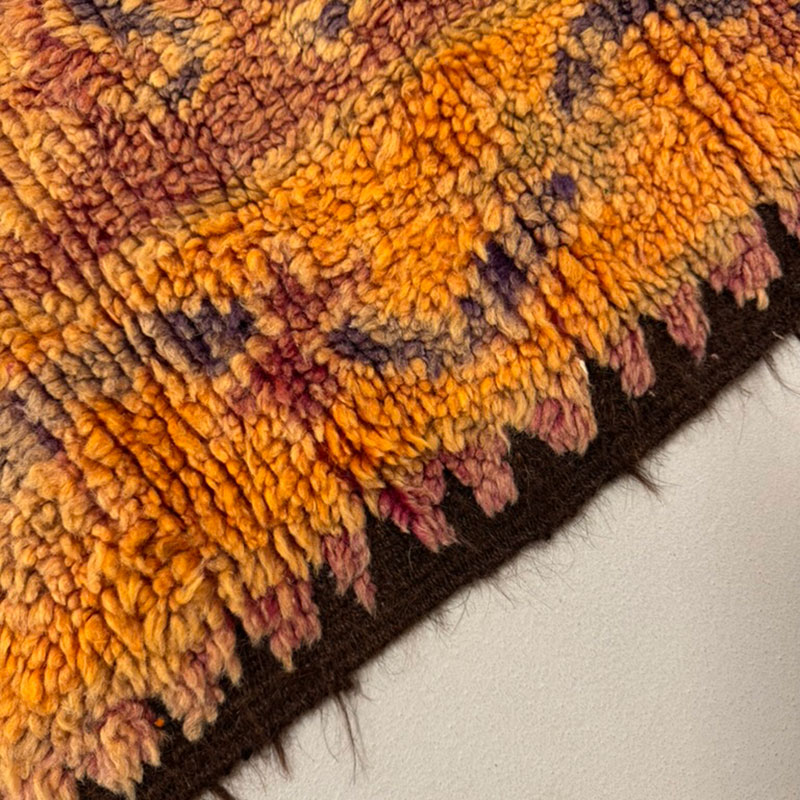
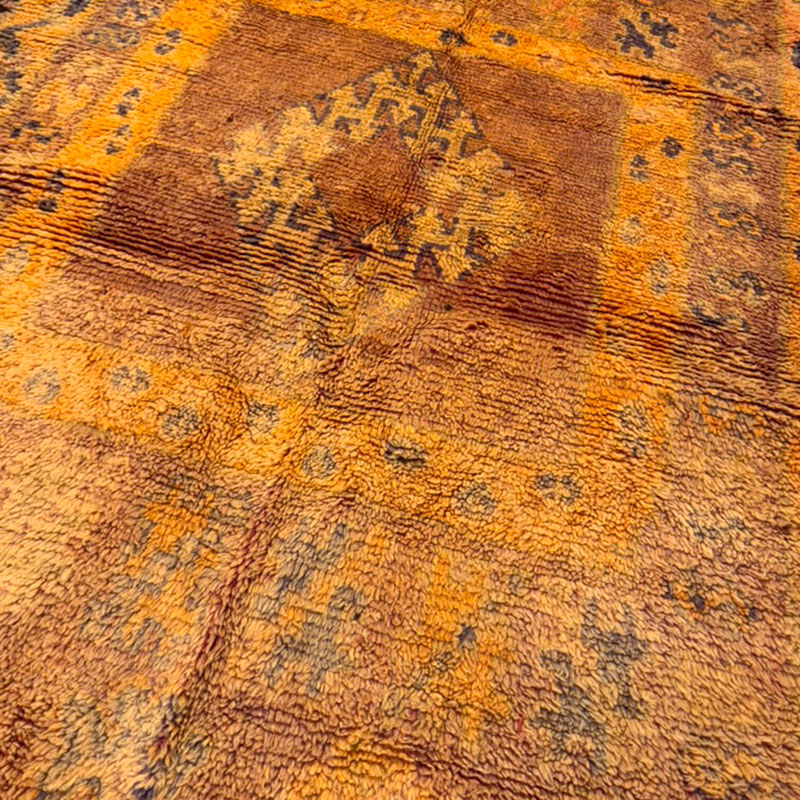
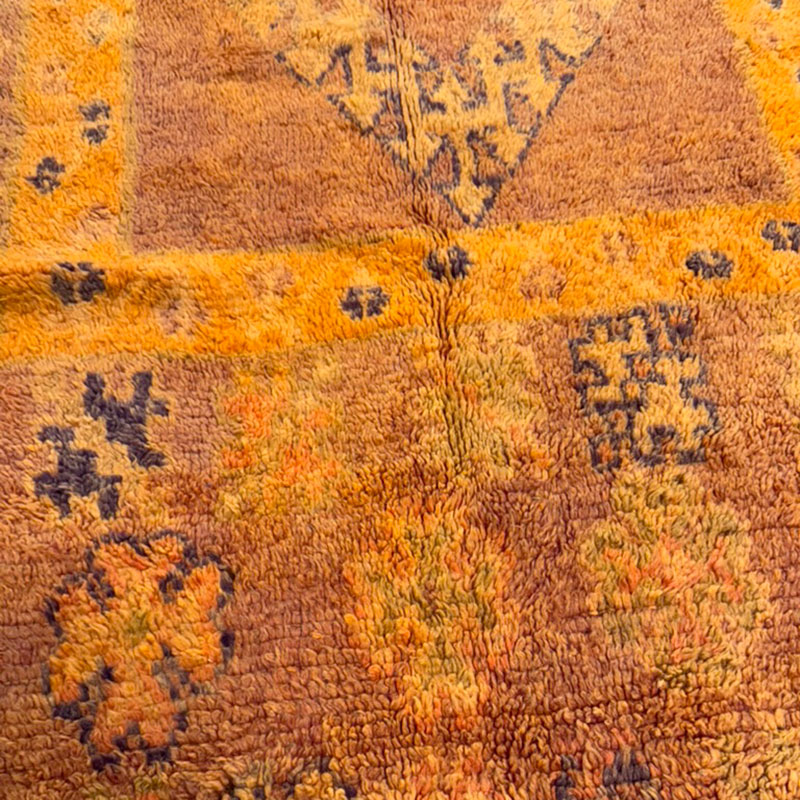
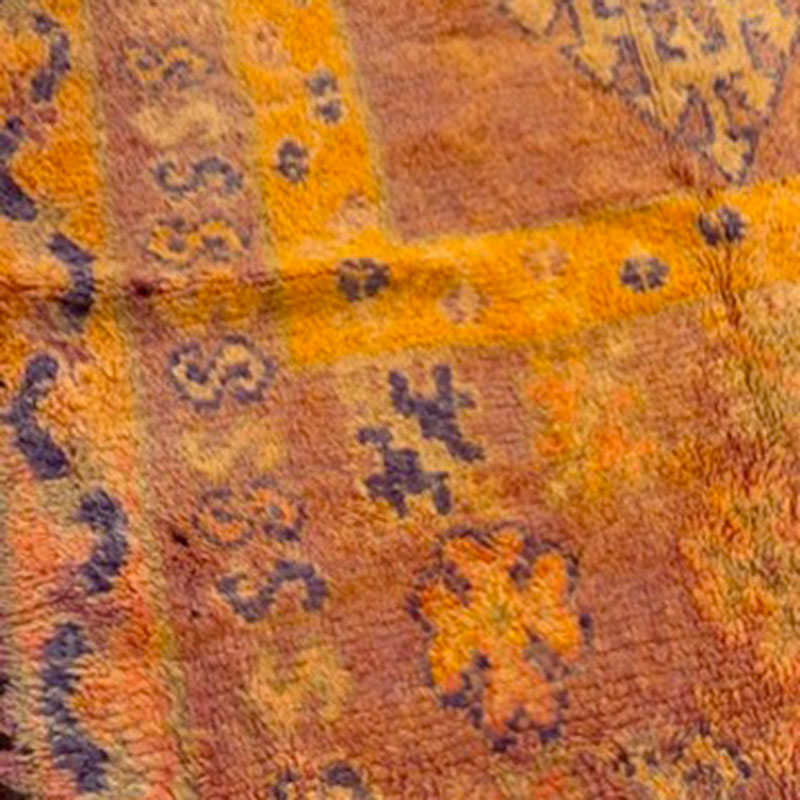
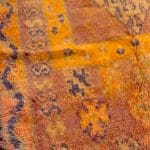
Colors: Natural dyes from plants, minerals and roots – such as saffron (yellow), henna (orange), indigo (blue) and pomegranate peel (red) – provide a warm and intense colour palette that fades beautifully over time.
-
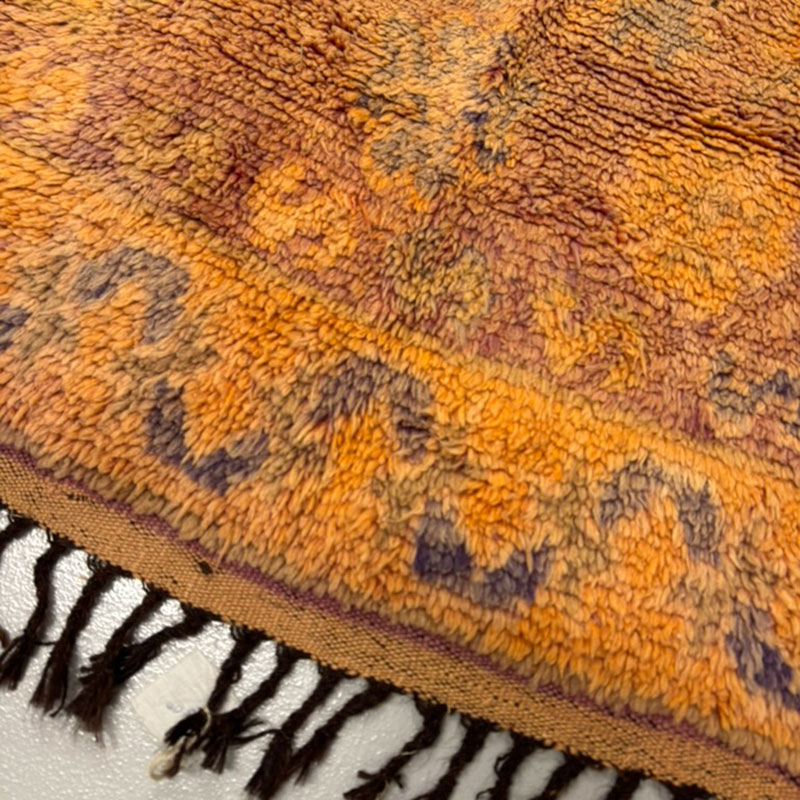
Patterns: Very detailed and often more “refined” than other Berber rugs. Typical motifs include:
-
Repeated rhombuses and stars
-
Tribal symbols which protects against the evil eye
-
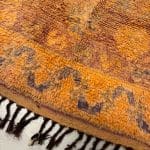
Borders with small patterns that frame the carpet
-
-
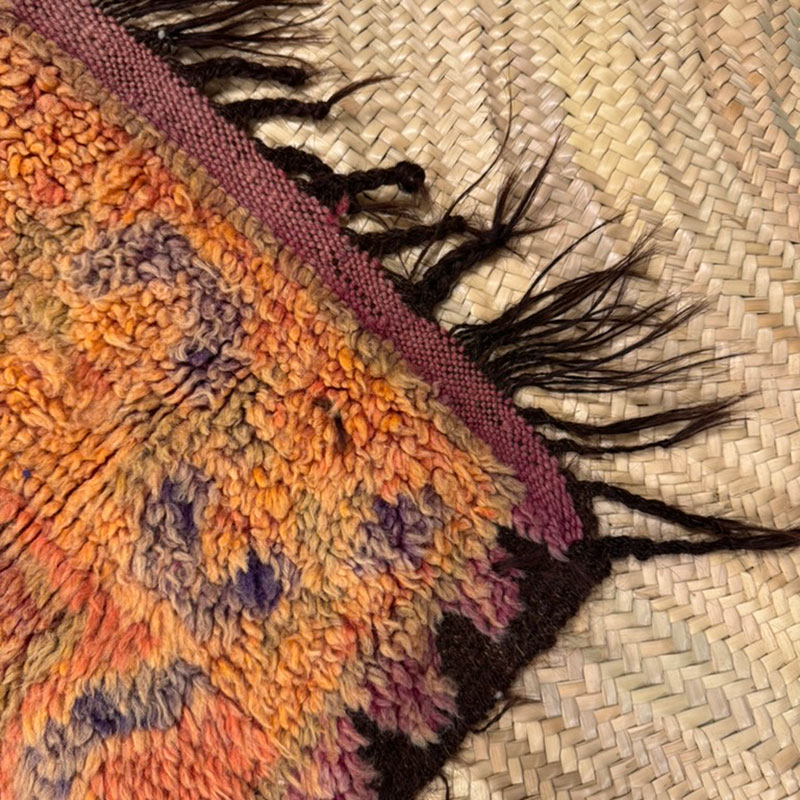
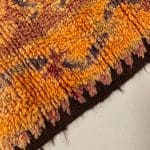
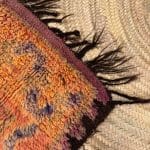
Technique: Taznakht is special because the carpets often combine three techniques in one blanket: knotted pile, kilim surfaces and embroidery-like patterns. This makes them more complex than, for example, Beni Ourain.
🌟 Rarity and value
-
Vintage Taznakht rugs (from the 1950s–1970s) are very rare today, as production at the time was limited to small villages and each carpet could take months to weave.
-
Unlike Beni Ouarain and Azilal, which have been mass-produced for export, genuine Taznakht rugs are more niche and are therefore less common on the market.
-
Their special combination of weaving techniques and rich colors make them today sought-after collectibles – especially those carpets that still have their original plant colors preserved.
-
Many experts and collectors consider Taznakht to be among the most sophisticated and artistic carpets from Morocco.
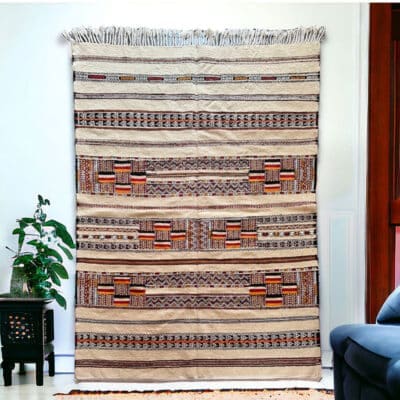
 Dansk
Dansk  English (UK)
  Svenska
  Norsk bokmål
  Deutsch
  Nederlands
  Français